Features
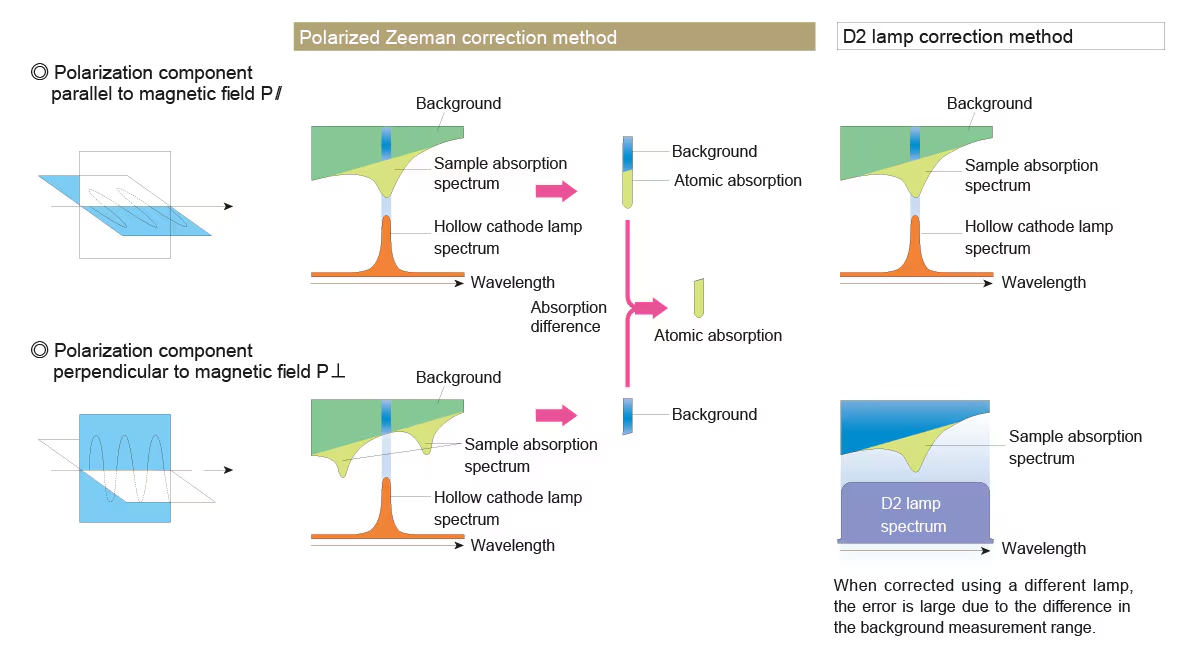
Polarized Zeeman Correction Method
Background Correction Using Only Hollow Cathode Lamp
The polarized Zeeman correction method, which uses a permanent magnet, provides a stabilized baseline, suppresses the effects of coexisting materials that have absorption of adjacent wavelengths, and facilitates highly reliable analysis.
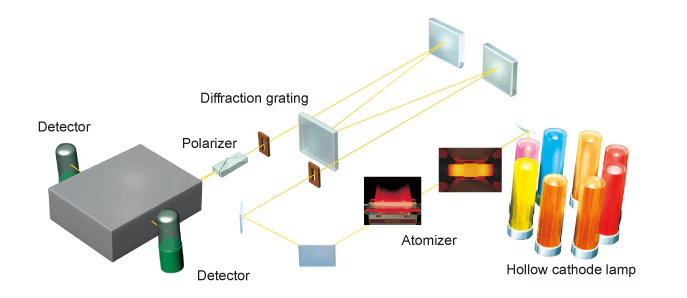
Dual Detector Method
Increases the Amount of Sampled Light and Reduces Noise
The dual detector method, by which the sample light and reference light are sampled by independent detectors, reduces the baseline noise. The two lights are also detected simultaneously, which increases the accuracy of corrections.
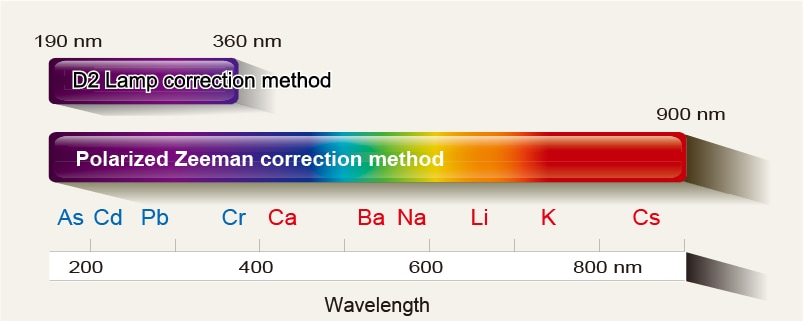
Wide Background Detection Range
All Elements are Covered by the Polarized Zeeman Correction Method
Background correction can be performed for elements that have absorption in the ultraviolet range or visible range. The polarized Zeeman correction method is one choice of correction method and has the advantage that it does not need to be selected for each element. It can also correct elements that cannot be corrected by the D2 lamp correction method, such as sodium and potassium.
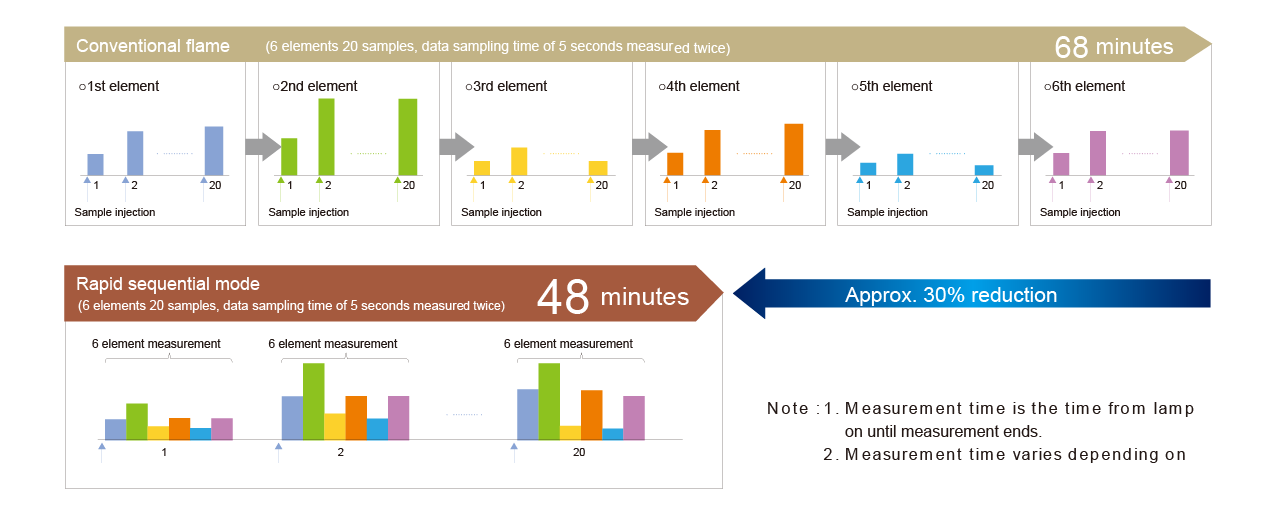
High-Accuracy, High-Speed Measurement by Rapid Sequential Mode(ZA4800)
Offering Sequential Measurement of a Maximum of 12 Elements and Faster Speed
Hitachi has achieved even higher speed in measurements by combining the existing polarized Zeeman correction method with a newly developed diff raction grating drive mechanism. This provides much faster measurements for users who are measuring multiple elements in the same sample using the fl ame method.